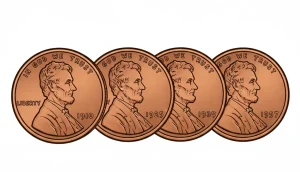
A coin scanner app helps collectors identify date, type, country, and common market ranges in seconds. It organizes scattered finds into structured entries and streamlines the initial evaluation steps. Yet surface condition still determines how precise that scan will be.
Dust, fingerprints, and residue distort small details and hide diagnostic elements. Cleaning, however, is a sensitive subject. You can remove loose dirt, but any attempt to “improve” a coin’s appearance can permanently reduce value.
This guide explains how to prepare a coin safely before scanning, how to identify it correctly, and how to store it after scanning so that it remains stable in your collection.
Preparing the Coin Before Identification
Handling and surface preparation matter more than any digital tool. Coins react to pressure, chemicals, and even moisture from the surrounding environment, including the skin. The goal is simple: remove only what sits on the surface loosely and avoid anything that changes the metal itself.
Safe Handling Basics
Coins should be handled by the edges only, as the flat surfaces pick up fingerprints instantly. Skin oils contain salts and moisture that slowly etch into metal and create cloudy, dull spots.
Once these marks appear, they cannot be reversed, even with professional treatment. Work at a stable table with lighting that does not cast harsh glare. A soft cloth, felt pad, or padded tray prevents accidental scuffs if the coin slips out of your fingers. Even a small drop from a low height can leave a rim dent or a noticeable mark on the fields.
The main rules are:
- Hold the coin by the rim.
- Keep the work surface soft and clean.
- Avoid bright overhead reflections that make details harder to see.
Safe handling also helps you inspect the surface correctly, because a clean, stable setup lets you see luster flow, micro-scratches, and small devices without distortion.
When Cleaning Is Acceptable — and When It Is Not
Collectors avoid cleaning because almost every cleaning method removes microscopic layers of metal or changes surface texture. Even gentle rubbing alters luster patterns and leaves hairlines that grading services recognize immediately. In many cases, the dirt or tone already visible on the coin is part of its natural history and contributes to its character.
Allowed preparation steps include only the following:
- Blowing off loose particles.
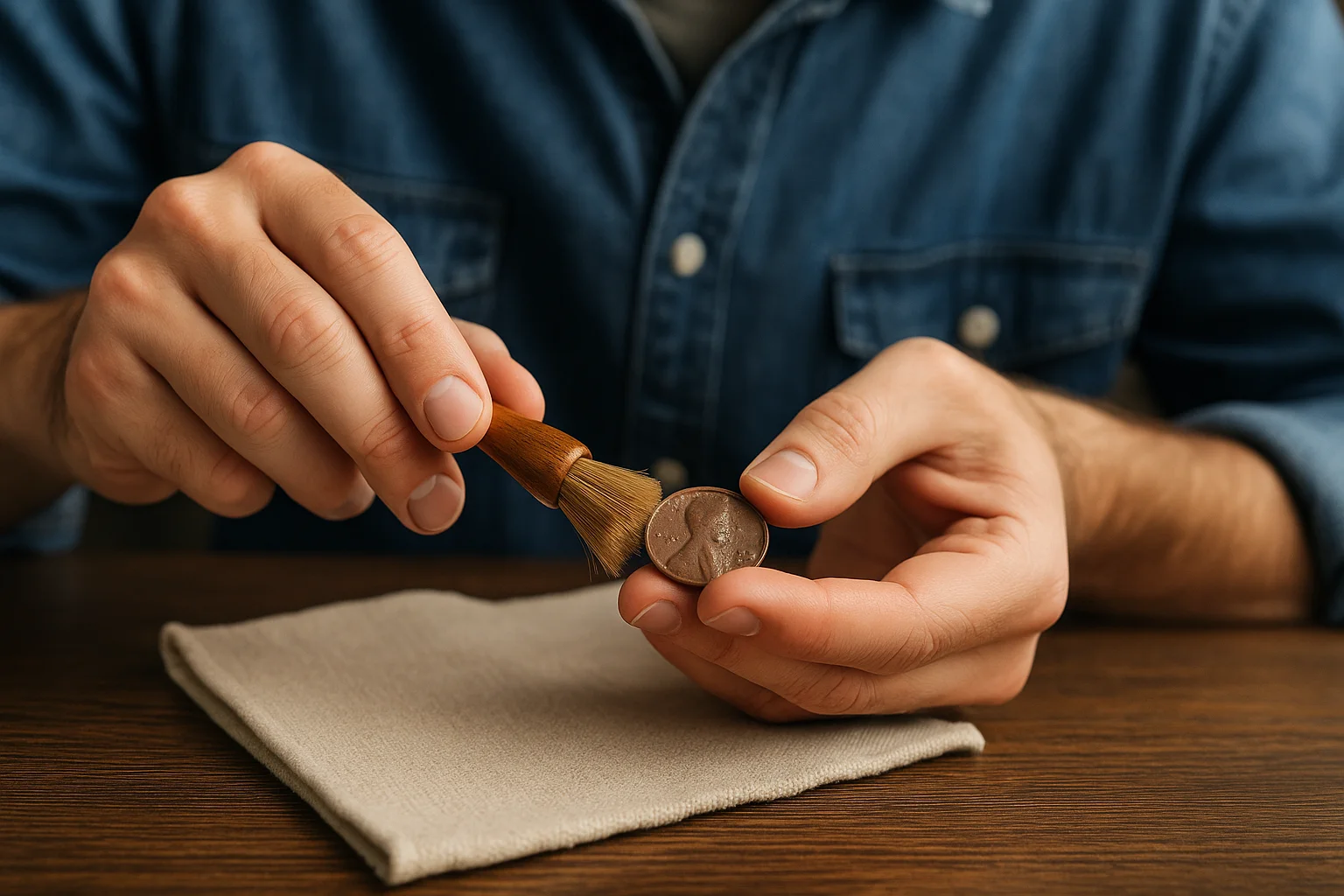
- Lightly dusting with a soft brush.
- Rinsing with clean distilled water if the dry soil does not detach.
These actions do not affect the metal. Everything beyond this — polishing, scrubbing, dipping, soaking, chemical treatment — causes immediate loss of originality. Even mild detergents leave films or remove micro-texture from the fields.
If a coin carries heavy soil, encrustation, tape residue, or unknown materials, break the process here. Professional services are the only safe solution. Certified conservators can remove contaminants without changing the surface structure. Attempting this alone often results in hairlines, shine patches, and tone loss.
Removing Dust Without Touching the Surface
Dust creates false shadows and hides fine marks that identification depends on. It can also lodge inside small recesses of the design, making the coin appear worn or weakly struck. Removing dust is safe as long as no pressure is applied to the metal. The goal is to lift particles off the surface without dragging them across it.
A simple three-step method works well:
- Blow air gently across the coin. Do not exhale directly; use a rubber blower.
- Use a very soft brush (e.g., sable) to lift remaining dust. Do not press.
- If particles persist, rinse the coin briefly in distilled water and place it on a lint-free cloth to dry naturally.
Drying must happen without wiping. Wiping leaves micro-scratches even on modern hard alloys, because dust grains turn into abrasives when moved across the fields. Letting water evaporate naturally preserves the original surface. This method also avoids creating smear marks that can confuse finish identification and distort the appearance of luster or patina.
Avoiding Accidental Damage During Preparation
Small mistakes often cause more damage than visible cleaning attempts. Coins react quickly to friction, pressure, drops, and sudden changes in the environment. Most accidental damage happens not during deliberate cleaning, but during routine handling.
- Dropping a coin on a hard table.
- Wiping moisture with tissue paper.
- Rubbing the stuck dust with a cloth.
- Using tap water containing minerals or chlorine.
The safest strategy is not to touch the coin. If something does not come off with air, a soft brush, or distilled water, leave it as is. Forcing removal usually scratches the fields or exposes fresh metal that ages differently from the rest of the surface.
Gentle preparation protects the originality of the coin, preserves luster patterns, and ensures that later identification steps (digital or manual) reflect the true condition of the piece.
Identifying the Coin Correctly
Surface preparation is only the first step. Once the coin is ready, identification becomes straightforward. Digital tools help with structure, but physical inspection reveals the important details.
Using Digital Tools Smartly
A good and reliable identification tool, like the Coin ID Scanner app, provides quick classification. It reads type, country, and typical value ranges and creates a record for each coin. Scans save time during large sorting sessions and reduce early confusion in mixed lots.
Our best coin identifier app for iPhone becomes especially useful for confirming mintmarks, identifying variants, or organizing coins by series. It recognizes the main features reliably and even offers you the current market price of the coin.
Digital tools are part of a system. They show context, dates, countries, and common price categories. They do not replace the physical check of metal, relief, texture, and edge structure. These elements still require your eyes.
What to Look For Before You Scan
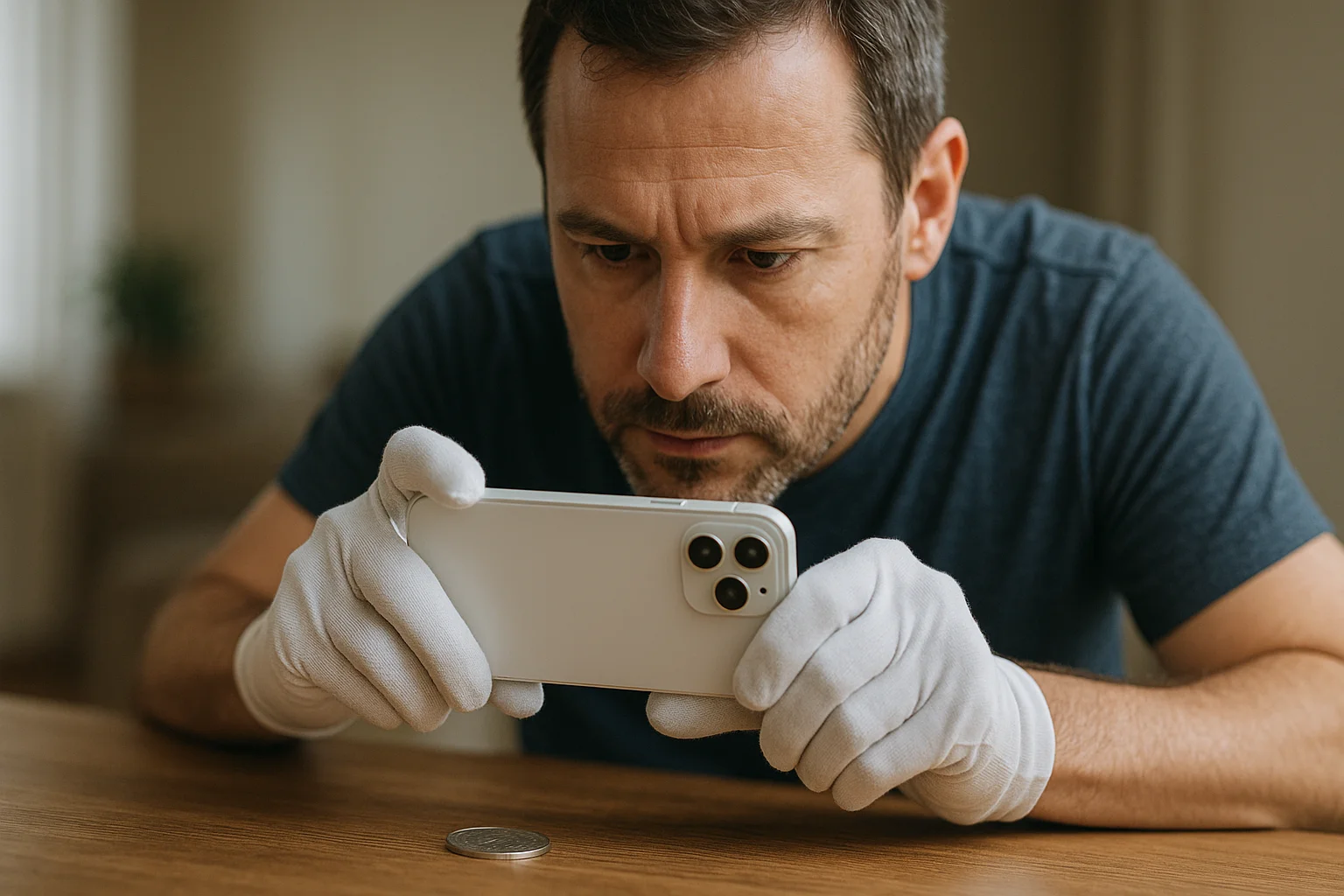
Scanning works best when you confirm a few things first. A short check improves clarity and helps the camera capture true relief, color, and texture without distortion.
Lighting
Use soft, diffused light. Direct beams wash out highlights and make mirrored fields look flat, so diffused light gives a more accurate reading of depth and tone.
Orientation
Rotate the coin slowly to catch relief angles. Many small details—like designer initials, weak digits, or mintmarks—appear only when the surface reflects light correctly.
Field clarity
Check for shadows created by dust or fingerprints. Even a thin layer of residue can blur fine lines and confuse the scan, so make sure the fields look even before taking a photo.
Edge inspection
Many coins hide mintmarks, privy marks, or security features on the edge. A quick edge check tells you what the scanner should detect and whether the coin needs an angled photo.
These small checks help ensure the scan picks up the correct profile and produces cleaner results.
When to Use a Professional Opinion
Some coins require an expert. These include:
- Unusual patina that may hide details. Thick or uneven toning can obscure relief.
- Potentially rare varieties. Subtle markers often need expert confirmation.
- Damage that affects inspection. Bends, corrosion, or residue distort the surface.
- Signs of previous cleaning. Hairlines or texture loss require trained evaluation.
If doubt remains after both physical and digital checks, a conservator or grading service can verify authenticity and recommend safe handling steps.
Storing and Preserving the Coin After Identification
Once the coin is scanned, labeled, and understood, storing it correctly preserves the condition that you worked to maintain.
Choosing Safe Holders and Containers
Safe storage protects the surface from air, moisture, friction, and unexpected drops. Proper holders also prevent accidental cleaning in the future.
A simple table helps compare options:
| Holder Type | Protection Level | Notes |
| Mylar 2×2 flips | Moderate | Cheap, good for sorting, not airtight |
| Airtight capsules | High | Best for long-term storage |
| Soft flips (PVC-free) | Medium | Flexible and safe when the material is verified |
| Paper envelopes | Low | Useful for bulk but not for premiums |
| Binder pages | Medium | Good for series builders, needs stable humidity |
PVC materials must be avoided; they release chemicals that damage surfaces over time.
Controlling the Environment
Coins stay stable when the environment stays stable. Sudden changes cause tone shifts and moisture accumulation.
- Keep coins in a dry room.
- Avoid window sunlight.
- Use small silica gel packs in boxes or drawers.
- Do not store coins in basements or bathrooms.
A steady environment prevents corrosion, especially on copper, silver, and nickel alloys.
Creating a Digital Inventory
Cataloging helps track progress and avoid duplicates. Our coin scanner app for Android and iOS stores photos, notes, and dates conveniently. It works well for collectors who keep coins in binders or capsules and want fast access to their records.
This system supports long-term organization. It prevents buying duplicates, improves tracking of upgrades, and creates a clear picture of your collection’s structure. So, try the app for yourself: it records coins accurately and keeps data organized even for large sets.
When Professional Conservation Is Necessary
Some coins develop issues even in storage. Tarnish, dark spots, or unusual residues can indicate chemical changes inside the holder. If the coin has value or historical importance, leave cleaning to professionals. Attempting to fix the surface at home risks removing metal, changing the tone, or exposing fresh copper or silver.
Professional conservators can:
- Neutralize harmful residues,
- Stabilize corrosion,
- Remove contaminants without altering relief,
- Prepare coins safely for grading.
This step protects both the surface and the long-term value of the coin.
Final Thoughts
Preparing a coin before scanning is not about making it look better. It is about removing loose dust, keeping the surface intact, and ensuring the scan reflects the true condition. Identification becomes simple when the coin is clean, well-lit, and handled correctly. Digital tools help structure your records and speed up evaluation, while physical checks confirm the details that software cannot read.
Proper storage completes the process. Holders, capsules, controlled humidity, and a clear digital catalog preserve the condition you worked to protect. Cleaning should always be minimal, and anything beyond dust removal belongs to a professional. With these steps, each scan becomes accurate, each coin stays safe, and your collection grows with confidence.